This website is managed by Ultima Markets’ international entities, and it’s important to emphasise that they are not subject to regulation by the FCA in the UK. Therefore, you must understand that you will not have the FCA’s protection when investing through this website – for example:
You will not be guaranteed Negative Balance Protection
You will not be protected by FCA’s leverage restrictions
You will not have the right to settle disputes via the Financial Ombudsman Service (FOS)
You will not be protected by Financial Services Compensation Scheme (FSCS)
Any monies deposited will not be afforded the protection required under the FCA Client Assets Sourcebook. The level of protection for your funds will be determined by the regulations of the relevant local regulator.
Note: UK clients are kindly invited to visit https://www.ultima-markets.co.uk/. Ultima Markets UK expects to begin onboarding UK clients in accordance with FCA regulatory requirements in 2026.
If you would like to proceed and visit this website, you acknowledge and confirm the following:
1.The website is owned by Ultima Markets’ international entities and not by Ultima Markets UK Ltd, which is regulated by the FCA.
2.Ultima Markets Limited, or any of the Ultima Markets international entities, are neither based in the UK nor licensed by the FCA.
3.You are accessing the website at your own initiative and have not been solicited by Ultima Markets Limited in any way.
4.Investing through this website does not grant you the protections provided by the FCA.
5.Should you choose to invest through this website or with any of the international Ultima Markets entities, you will be subject to the rules and regulations of the relevant international regulatory authorities, not the FCA.
Ultima Markets wants to make it clear that we are duly licensed and authorised to offer the services and financial derivative products listed on our website. Individuals accessing this website and registering a trading account do so entirely of their own volition and without prior solicitation.
By confirming your decision to proceed with entering the website, you hereby affirm that this decision was solely initiated by you, and no solicitation has been made by any Ultima Markets entity.
Ultima Markets does not have an establishment in Singapore and does not operate from Singapore.
Ultima Markets does not provide products or services to citizens or residents of Singapore, and account applications from Singapore citizens or residents will not be accepted.
If you are a citizen or resident of Singapore, please do not open an account or use Ultima Markets’ products or services.
By selecting “Acknowledge and Continue Browsing”, you confirm that you are accessing this website on your own initiative and that your access is not the result of any direct marketing, targeted advertising, solicitation, or promotional activity by Ultima Markets.
Nothing on this website constitutes an offer, solicitation, or promotion of products or services in any jurisdiction where such activity is prohibited. You are responsible for ensuring that your access to and use of this website complies with applicable local laws and regulations.
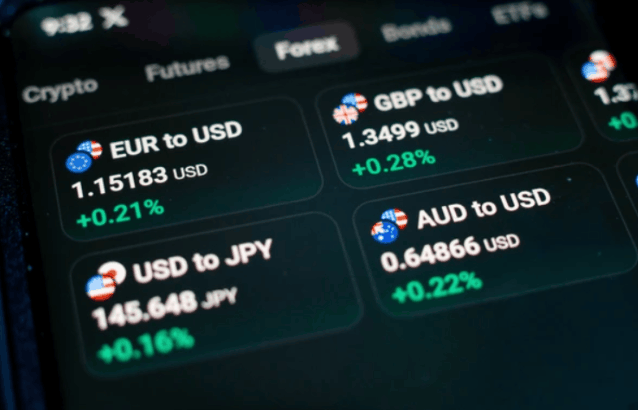
Discover the best forex currency pairs to trade and see how liquidity, spreads and volatility can help you choose the right pairs for your trading style.
Choosing the best forex currency pairs to trade starts with understanding where global money actually flows. The latest Bank for International Settlements (BIS) survey shows that daily FX turnover has risen to about 9.6 trillion US dollars, with the US dollar on one side of around 89 percent of all trades. Within that huge market, trading is heavily concentrated in a small group of major forex pairs.
According to the latest Bank for International Settlements (BIS) triennial survey, global FX turnover has jumped to about $9.6 trillion per day in April 2025, a 28% increase from 2022. The US dollar remains dominant, sitting on one side of about 89% of all trades.
Independent analysis of the 2025 survey shows that:
EUR/USD remains the most traded pair (around 21.2% of global turnover).
USD/JPY holds second place at about 14.3%.
The seven traditional major pairs still account for roughly two-thirds (66.3%) of global FX turnover, even as other pairs grow.
This guide breaks down the top forex pairs, explains how they behave, and shows you how to choose the right ones for your own trading plan.
What Are Currency Pairs?
Currency pairs are a way of quoting one currency’s value against another in the forex market. In every pair, the first currency is the base currency and the second is the quote (or counter) currency. The price shows how much of the quote currency you need to buy one unit of the base currency.
Example:
EUR/USD = 1.1000
EUR = base currency
USD = quote currency
1 EUR = 1.10 USD
So you’re always trading one currency versus another, buying one while simultaneously selling the other.
How Many Currency Pairs Are Actually Tradable?
There’s no fixed official number, but in practice only a few dozen currency pairs are actively traded with good liquidity. Research shows that 18 core pairs account for the majority of global FX volume, while retail brokers typically offer around 40–80 tradable pairs (majors, minors and exotics) on their platforms.
5 Best Forex Currency Pairs to Trade
USD/CNY now ranks third by global turnover (8.1%), but it is not typically a core retail pair, so this list focuses on the majors most retail traders actually use. The table below compares the five at a glance, followed by a closer look at each.
Pair
Share of global FX turnover (2025)
Typical volatility
Most active session
Main drivers
Best suited to
EUR/USD
21.2%
Low to moderate
London and New York overlap
ECB vs Fed policy, eurozone and US data
Beginners, scalpers, day and swing traders
USD/JPY
14.3%
Moderate
Tokyo and London
Fed vs Bank of Japan, bond yields, risk sentiment
Rate-driven and risk-sentiment strategies, Asia-Pacific traders
GBP/USD
7.6%
Moderate to high
London
Bank of England vs Fed, UK data
Experienced day and swing traders
AUD/USD
4.9%
Moderate
Sydney and Tokyo
Commodities, China demand, RBA
Asia and Oceania traders, macro and commodity strategies
USD/CAD
5.3%
Moderate
New York
Oil prices, Bank of Canada vs Fed
Traders active in US hours, oil-linked strategies
Source: BIS Triennial Central Bank Survey, April 2025 (published 30 September 2025). Volatility is a general guide, not a forecast.
EUR/USD: Most Liquid and Widely Traded
EUR/USD is the benchmark in FX. It has the deepest liquidity and usually the tightest spreads across most brokers, which makes execution smoother and cheaper for almost every style, including scalping, day trading and swing trading. It accounts for around 21.2% of global FX turnover, making it the single most traded currency pair in the world. It trades heavily during the London and New York overlap, giving strong intraday moves and clean reactions to macro news.
Best for: traders who want tight spreads, high liquidity and plenty of analysis and news. A great core pair if you are building a watchlist of the best forex currency pairs to trade as a beginner.
USD/JPY: Top Pair for Rates and Asia Session
USD/JPY is heavily driven by interest-rate differentials and global risk sentiment. It is very liquid in both the Tokyo and London sessions and offers clear macro stories (Fed vs Bank of Japan, yields, risk-on and risk-off). It makes up roughly 14.3% of global turnover, making it the second most traded pair globally. The yen is a major safe-haven currency, so USD/JPY often reacts strongly when markets switch between risk-on and risk-off.
Best for: traders in Asia-Pacific time zones who want an active pair during their day, and strategies that watch bond yields, central bank policy and risk sentiment.
GBP/USD: Higher Volatility for Experienced Traders
GBP/USD (“cable”) combines strong liquidity with above-average volatility. It tends to move more than EUR/USD on major news, offering bigger intraday ranges and momentum, which is attractive if you can handle the swings. It represents around 7.6% of global daily turnover, down from 9.5% in 2022, but it is still frequently cited by brokers and analysts as one of the core major pairs alongside EUR/USD and USD/JPY.
Best for: more experienced day and swing traders who want larger moves, and those who follow UK vs US fundamentals (Bank of England vs Fed, UK data, risk sentiment around sterling).
AUD/USD: Commodity & Asia-Pacific Favourite
AUD/USD is a major pair with strong links to commodities (iron ore, coal, metals) and Chinese demand, so it often trends cleanly with global growth sentiment. It is also one of the most active pairs during Asia-Pacific hours, which makes it a go-to market for traders in that time zone. It contributes around 4.9% of daily FX turnover in the latest BIS-based analysis. The Australian dollar is among the most traded currencies worldwide, with a share of about 6% of all trades, and is heavily used for carry trades and commodity exposure.
Best for: traders in Asia and Oceania who want an active pair during their daytime, and strategies that combine macro, commodities and China news (for example, trading around RBA meetings, Chinese PMIs and iron ore moves).
USD/CAD: Oil-Sensitive North American Pair
USD/CAD gives you clean exposure to both the US economy and Canada’s oil-driven currency. Because Canada is a major crude exporter, USD/CAD often reacts strongly to oil price swings, which creates clear macro stories and trading setups. It accounts for roughly 5.3% of daily FX turnover (BIS-based rankings) and is one of the main North American FX benchmarks, heavily traded during the New York session.
Best for: traders active in US trading hours, and those who like to link WTI and Brent moves with FX, for example watching USD/CAD when oil breaks key support or resistance.
Want to Start Trading These Pairs?
Discover the top 5 forex currency pairs that offer the best trading opportunities. From EUR/USD to USD/JPY, learn why these pairs are favored by experienced traders for their liquidity, volatility, and profit potential.
The reason EUR/USD, USD/JPY, GBP/USD, AUD/USD and USD/CAD are often called the best forex currency pairs to trade is not just popularity. They tick several key boxes that matter for real trading performance.
High Liquidity
These pairs trade huge volumes every day, which means:
Orders are filled faster and more reliably
It’s easier to get in and out without moving the market
Price action is less “choppy” from random illiquid spikes
Tight Spreads and Lower Costs
Because so many traders and institutions trade these pairs, brokers compete hard on pricing. Result:
Tighter bid–ask spreads than most minors and exotics
Better conditions for scalpers and day traders
Less cost drag on every trade you place
Over hundreds of trades, tight spreads are a real edge.
Clear Fundamental Drivers
These majors are tied to large, transparent economies (US, Eurozone, Japan, UK, Canada, Australia), so they react in a logical way to:
Interest-rate decisions
Inflation and jobs data
Growth and risk sentiment
That makes it easier to build a macro or news-based framework around them.
Balanced Volatility
They offer a good mix of movement and stability:
Pairs like EUR/USD and USD/JPY tend to be smoother and easier for beginners
GBP/USD and, to a lesser extent, AUD/USD and USD/CAD, provide bigger ranges for more experienced traders
Strong Coverage and Education
Because these are the top traded markets, you get:
Plenty of analysis (bank research, news, chart ideas)
More educational content and historical data
Better tools and resources built specifically around these pairs
How Many Forex Pairs Should I Trade?
Start with 1 to 3 forex pairs. Only move up to 4 to 6 once you are consistently profitable. Fewer pairs means better focus. Every currency pair has its own “personality”, how it reacts to news, when it moves, how it pulls back.
If you watch too many pairs, you miss good setups because you’re jumping around, and you will overtrade just because you see something moving. You never really learn the deeper behaviour of any pair.
With 1 to 3 pairs (for example, EUR/USD, USD/JPY, GBP/USD):
You see the same price patterns again and again
You remember how they react to NFP, CPI, rate decisions
You can build a clear playbook for each pair
Conclusion
The best forex currency pairs to trade are usually not the most exotic ones, but the ones that match your time zone, risk profile and strategy. Major pairs like EUR/USD, USD/JPY, GBP/USD, AUD/USD and USD/CAD offer the right mix of liquidity, tighter spreads and clear fundamental drivers which is exactly what most retail traders need to build a consistent approach.
Instead of trying to trade everything your platform offers, focus on a small watchlist of 3–5 major pairs, learn how they react to news, and apply strict risk management. Once you are consistent, you can gradually add selective crosses or exotics if they genuinely fit your edge.
With Ultima Markets, you can access a wide range of major, minor and selected exotic currency pairs, alongside market analysis and education designed to help you understand how each pair moves. Combine that market access with a disciplined plan and a focused watchlist, and you’ll be in a much better position to turn knowledge about the best forex currency pairs to trade into a structured trading routine.
FAQ
Which currency pair is most traded?
EUR/USD is the most traded pair, at about 21.2% of global FX turnover in April 2025, according to the BIS.
What are the best currency pairs to trade?
EUR/USD, USD/JPY, GBP/USD, AUD/USD and USD/CAD are the most popular choices because they combine high liquidity, tight spreads and clear fundamental drivers.
Which currency pair is most profitable in forex?
No pair is reliably the most profitable. Results depend on your strategy, risk management and market conditions. Liquid pairs such as EUR/USD keep costs low, while GBP/USD offers larger moves with higher risk.
What are the main forex currency pairs?
The seven major pairs are EUR/USD, USD/JPY, GBP/USD, AUD/USD, USD/CAD, USD/CHF and NZD/USD. All include the US dollar.
What are the top 20 forex pairs?
The top pairs by turnover all involve the US dollar, led by EUR/USD, USD/JPY, USD/CNY, GBP/USD, USD/CAD, AUD/USD, USD/CHF and USD/HKD. Rankings shift with each BIS survey, so check the latest release for the full list.
Share Now
Disclaimer:This content is provided for informational purposes only and does not constitute, and should not be construed as, financial, investment, or other professional advice. No statement or opinion contained herein should be considered a recommendation by Ultima Markets or the author regarding any specific investment product, strategy, or transaction. Readers are advised not to rely solely on this material when making investment decisions and should seek independent advice where appropriate.
Thank you for visiting the Ultima Markets website. Please note that this website is intended for individuals residing in jurisdictions where access is permitted by law. Ultima and its affiliated entities do not operate in your home jurisdiction.
By clicking ‘Acknowledge’, you confirm that you are entering this website solely on your own initiative and not as a result of any specific marketing outreach. You wish to obtain information from this website based on reverse solicitation principles, in accordance with the applicable laws of your home jurisdiction.